

Expression library
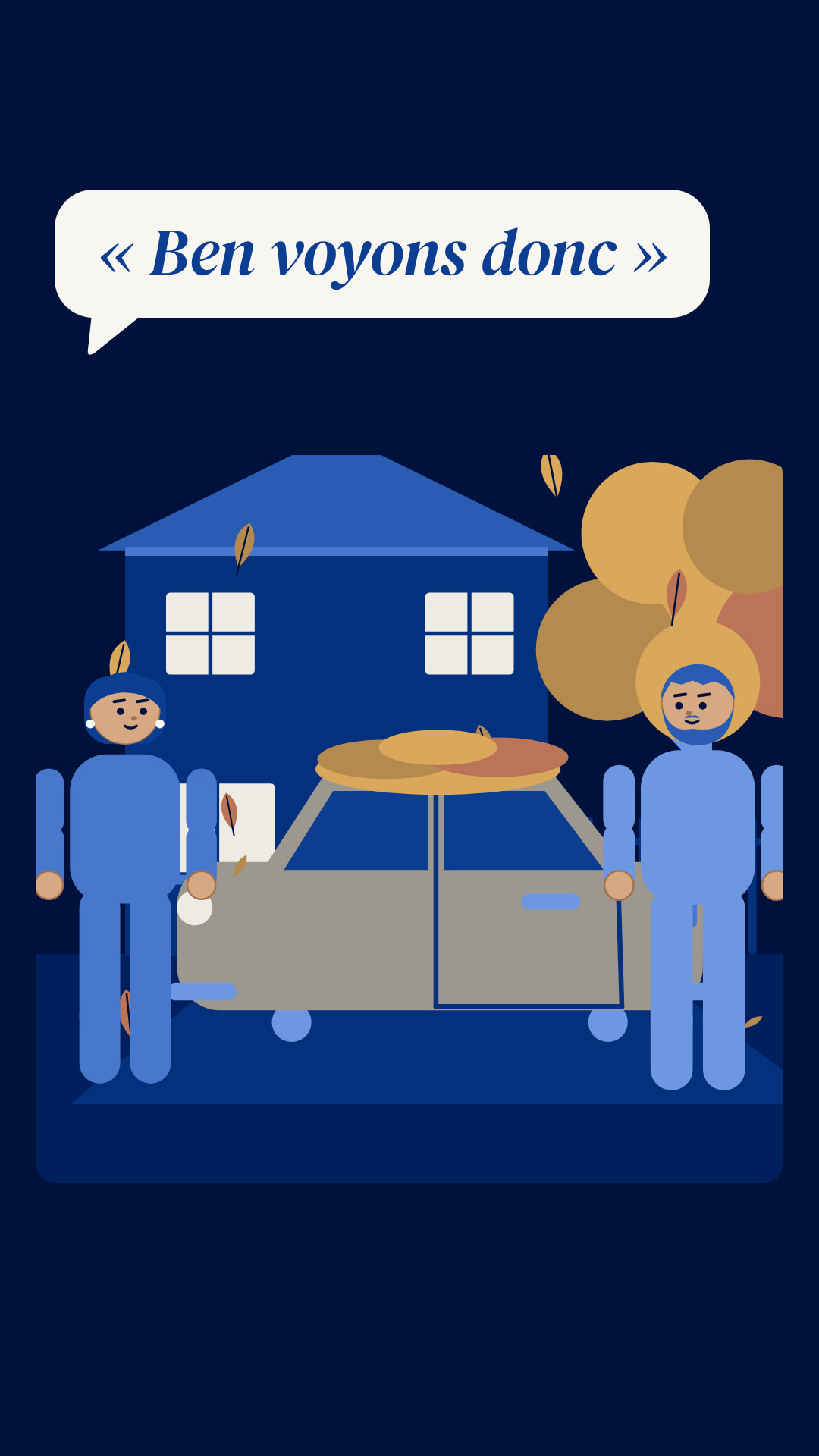
« Ben voyons donc »
No way! Oh, come on! Come on, it’s OK.
Your recording stays on this device. Nothing is sent.
Heard
« Ben voyons donc »
Literally
Well, let’s see, then.
Means
A reaction. Amazed: “No way!” Flat: “Oh, come on!” Kind: “Come on, that can be fixed.”
Say back
« Ben voyons donc! »
No way!
 Captions on
Answer in the YouTube comments: Which mood would you use it in today?
Literally “well, let’s see, then”, it is a reaction: amazed, flat or kind. The tone tells you which.
When to use it
Familier
Familier. « Donc » has no k sound here.
Example lines
- « Mais voyons donc! »Oh, come on!Usito, « donc »
- « Tu es capable, voyons. »You can do it, come on.Usito, « voir »
Practise it
2 questionsFamilier. « Donc » has no k sound here.
Practise with flashcardsEvery Sunday, the week in Québec French
The week’s expressions and a two-minute quiz, by email every Sunday. Plus a free printable sheet of every expression we’ve taught so far, right away.
Sources
Every claim in the video is checked against these.
- Usito, entry « voir », sense 8Q/C, familier; astonishment, irritation; « voyons » urges or reproaches.
- Usito, entry « donc »Reinforces an exclamation; said [dɔ̃], no k.
- Larousse French-English, « ben »« Ben » is the familier form of « bien ».