Le français québécois, semaine après semaine Semaine 1 en français québécois
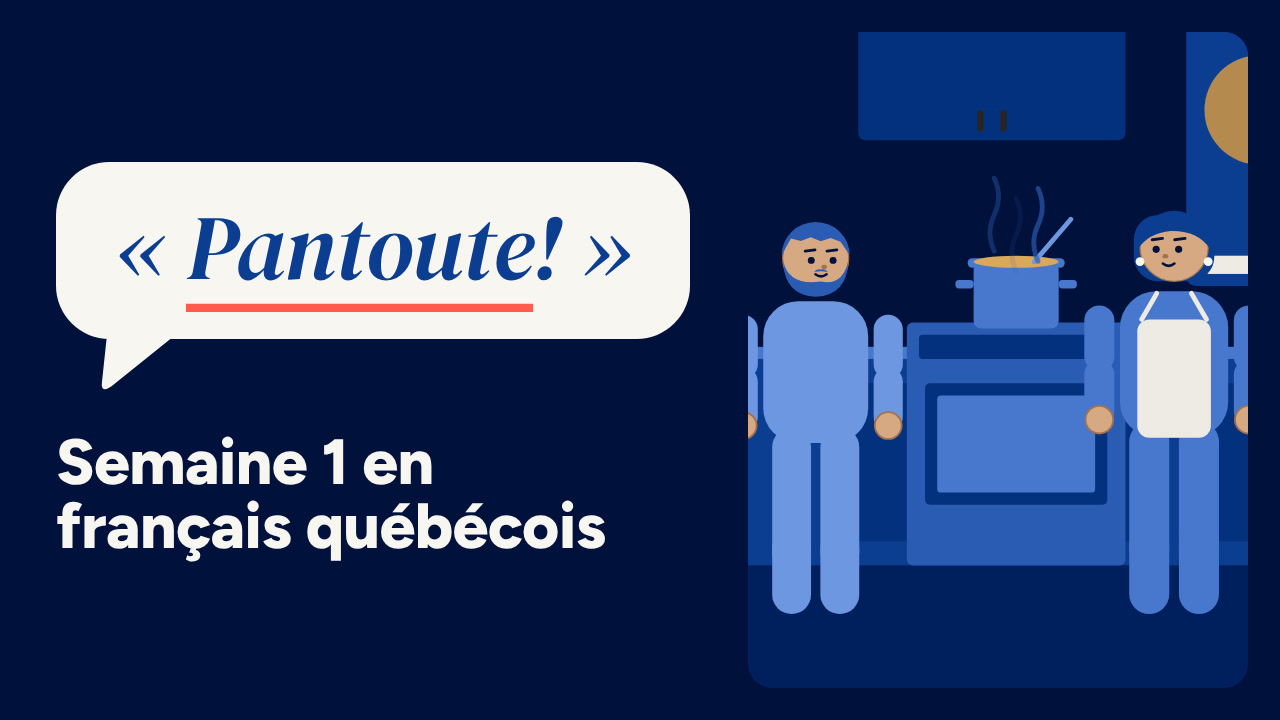
Lire 8 min , la longue vidéo Le français québécois, semaine 1 : pantoute, c’pas pire, ben voyons donc et plus, sous-titres activés Sous-titres activés
Regarder sur YouTube
Semaine 1, en ligne le 18 oct. 2026, 8 min Le français québécois, semaine 1 : pantoute, c’pas pire, ben voyons donc et plus
Faire le quiz de la semaine 1
Notre première semaine de français québécois en une vidéo : « pantoute » , « T’as-tu été voter? » , « c’pas pire » , notre longue fin de semaine de l’Action de grâce, « ben voyons donc! » , « le dép » et « c’est plate » . Puis un court quiz.
Fiche à imprimer
Transcription
Transcription × Chaque réplique de la vidéo, telle qu’elle est dite. La narration est en anglais.
Julie « T’en veux? » Jacob « Non merci, j’ai pas faim pantoute. » Narration Pantoute, c’pas pire, ben voyons donc… Your first week of Québec French, all in one video. Narration Pantoute? Narration Not at all. It makes a no stronger. Narration « Il pleut pas pantoute » : it’s not raining at all.Narration « Rien pantoute » : nothing at all.Narration It goes back to 1880, from the way people said « pas en tout » . Narration « Pantoute » is familier: for friends and family.Julie « T’as-tu été voter? » Narration Québec just voted. Know what she's asking? Julie « Pis, t’as-tu été voter? » Jacob « Ben oui, j’ai été voter après la job. » Narration Literally: you have been to vote? Narration In real life: did you go vote? Narration Casual, and very common. Narration Take a plain sentence. Narration Add « tu » after the verb: now it's a yes-or-no question. Narration Here, it isn't you. It's a question marker. Narration Careful French: « t’es allé » . Narration Everyday French: « t’as été » . Narration Same meaning. In Québec, you'll hear it all the time. Narration Four election words. Narration « Comté » Narration Literally, county. It means your riding. Narration Officially: « circonscription » . Narration « Député » Narration The member your riding elects. In English: an MNA. Narration « Minoritaire » Narration A minority government: the governing party lacks a majority. Narration « Premier ministre » Narration One French title. In English: premier for Québec, prime minister for Canada. Narration Your turn. Julie « Pis, t’as-tu été voter? » Narration How do you answer? Jacob « Ben oui, j’ai été voter! » Jacob « C’pas pire. » Narration Literally: it’s not worse. So, is he complaining? Julie « Pis, le café? » Jacob « Hmm. C’pas pire! » Narration Heard: « c’pas pire » . Narration Literally: it’s not worse. Narration In real life: not bad. Pretty good. Narration Casual French. You’ll hear it a lot in Québec. Narration The tone does the work. Jacob « C’pas pire. » Narration Flat: it’s OK. Jacob « C’pas pire! » Narration Warm, with a nod: that’s really good. Narration In full, it’s « c’est pas pire » . Said fast, the words run together. Narration Say « pire » like peer, with a French R. Julie « Comment ça va? » Jacob « Pas pire, toi? » Narration On its own, it answers how are you. Narration You’ll also hear « pas si pire » and « pas trop pire » . Same idea. Narration Your turn. Julie « Pis, c’est bon? » Narration Tell her it’s pretty good. Jacob « C’est pas pire! » Narration Our first long episode: one Thanksgiving long weekend in Québec, from the orchard to the supper table. Narration At the table, « C’est écœurant! » can be a compliment: it’s amazing. Narration The whole family comes: « la parenté » , all the relatives. Narration The evening meal is « le souper » . Narration And after the turkey? « Chu plein » : I’m full. Narration The whole episode is on the channel. Julie « Ben voyons donc! » Narration Julie isn’t upset. She’s amazed. Here, « ben voyons donc » means: no way! Narration Now watch Jacob. Jacob « Ben voyons donc… » Narration Same three words. Now it’s: oh, come on! Julie « Ben voyons donc, ça se répare! » Narration And here, it’s gentle: come on, that can be fixed. Narration Literally: well, let’s see, then. Narration Really, it’s a reaction: surprise, annoyance or comfort. The tone tells you which. Narration It’s familier: friends and family. Narration And in this phrase, donc has no K. « Ben voyons donc. » Narration Your turn. Jacob’s about to say it. Surprise, annoyance, or comfort? Jacob « Ben voyons donc. » Julie (laughs) Narration Annoyance. Mostly. Narration And when someone says it amazed, answer: « Ben oui! » Yep, really. Narration « Dépanneur. » Narration You’ll find one on corners across Québec. Do you know what it is? Narration In English, a convenience store: a small shop open long hours, for milk and everyday things. Narration The name comes from « dépanner » : to get someone out of a « panne » , a breakdown. The dépanneur gets you out of a jam. Narration People often shorten it to « le dép » . In Québec English too: the dep. Narration Now watch Julie at the counter. Julie « Ah non… ma carte passe pas! » Jacob « Inquiète-toi pas, j’vais te dépanner. Tu me paieras demain. » Julie « Merci, ça me dépanne! Demain, je te paie une broue. » Narration Your turn. What is Jacob offering? Narration To help her out. « Dépanner » means helping someone out of a tight spot, for example by covering them for a bit. And « ça me dépanne » : that helps me out. Narration And « la broue » ? A familiar word for beer. Its first meaning: foam. Narration « Dépanneur » is standard. « Dépanner » , to help out, and « broue » are familier.Narration Since 1983, it’s the recommended word in Québec. In 2015, it even made the Oxford English Dictionary. Narration So when you’re out of milk: « J’vais au dép. » Julie « C’est plate. » Narration Word for word: it’s flat. But Julie isn’t talking about the TV. Narration In Québec, « c’est plate » means: it’s boring. Narration Really boring? « C’est plate à mort. » Deadly boring. Narration And say the T: « plate » , not « pla » . Narration Now listen to Jacob. Jacob « Ah… c’est plate. J’peux pas venir samedi, j’aurais trippé. » Narration Here, « c’est plate » means: that’s too bad. Narration And « j’aurais trippé » ? I would’ve had a blast. « Tripper » : to have fun. Pretty much the opposite of plate. Narration Fun fact: it comes from the English « trip » , which itself comes from old French « triper » : to jump around and dance. Narration Your turn. Boring, or too bad? Julie « Y a pus de café? C’est plate! » Narration Too bad. Disappointing, not boring. Narration It works for people too: « il est plate » , he’s lame, not cool. Narration « C’est plate » and « tripper » are familier: friends and family.Narration Quick quiz! Seven phrases from this week. Answer before the ring runs out. Narration Pantoute? Narration Not at all. It makes a no stronger. Narration Bad news? Narration No! It means not bad. Said warmly, it’s a real compliment. Jacob « Ben voyons donc! » Narration Amazed, it means: No way! Said flat, it’s: Oh, come on. Narration And this corner store? Narration A dépanneur. Le dép, for short. Narration « T’as-tu été voter? » Narration Did you go vote? The « tu » makes it a question. Narration « Mon comté » ?Narration My riding: my electoral district. Narration And « c’est plate » ? Narration Boring. Or: that’s too bad. Narration Pantoute, c’pas pire and ben voyons donc are familier. Dépanneur is standard. Narration Which one do you use the most? Narration You heard it. Now you know it. 

 Sous-titres activés